
Women in Yoga Have Always Been There
Women and yoga share a deep bond. This bond goes back thousands of years. Many people think yoga is new for women. However, this isn’t true. Women practiced yoga in ancient times. Unfortunately, they didn’t get credit for their work.
Walk into any yoga studio today. You’ll see mostly women. About 80% of yoga students are female in Western countries. This might seem new. Nevertheless, women have always been part of yoga’s story. They were students and teachers. Some even played goddesses in yoga tales.
The truth is simple. Women in yoga are not newcomers. Rather, they return to a practice that welcomed them long ago. Modern classes look different from old practices. Still, the spirit stays the same. Women find strength through yoga. They also find peace and healing. They always have.
Women in Ancient History
Early Records and Hidden Stories
Yoga began long ago in India. It started as a spiritual practice. Most old writings talk about men. They mention male teachers and students. However, women were there too.
Ancient texts hint at their presence. Temple carvings show women in yoga poses. Stories tell of wise women. These women knew yoga secrets. Therefore, women’s role was real but often hidden.
Learning in Ancient Times
Some women learned yoga from family. Others studied in temples. Special schools also taught yoga. Society had strict rules back then. These rules often kept women from school. Despite this, yoga reached them anyway.
Mothers taught daughters the poses. Sisters shared what they knew. As a result, women passed yoga down through families. This created a chain of practice. Therefore, yoga survived in homes. It lived on even when schools excluded women.
The Goddess Connection
India’s goddess tradition links women to yoga. Many Hindu goddesses show different energies. For example, Shakti is divine female power. Likewise, Durga shows strength and courage. Kali stands for change and growth.
These goddesses matter in spiritual work. Consequently, women who did yoga honored them. Moreover, they saw themselves in goddess stories. This gave women spiritual proof. In other words, their practice had sacred roots.
Persistence Through Time
Yoga changed as centuries passed. Different schools made different styles. Some welcomed women openly. Conversely, others kept them out.
Nevertheless, women always found a way to practice. They adapted to their situation. They pushed through obstacles. Furthermore, they kept yoga alive at home. This drive proved vital. Without it, women’s yoga might have died out.
The Modern Yoga Movement
Early Pioneers Travel West
The modern movement brought big changes. Yoga spread beyond India in the 1800s and 1900s. Western people got curious about Eastern ways. Consequently, this opened doors for women.
Some brave women traveled to India. There, they learned from yoga masters. Then they brought yoga home. This took real courage. After all, they broke social rules by traveling.
Overcoming Social Barriers
Early women faced many problems. Society expected different things back then. Women should stay home and raise kids. Additionally, traveling alone seemed wrong. Studying foreign practices seemed worse.
Despite this, these women kept going. They believed yoga could help people. Therefore, they worked hard to share it. Their effort paid off. Eventually, they gained respect.
The 1960s and 1970s Revolution
The 1960s and 1970s brought more change. More women taught yoga in public. They opened studios across America and Europe. They also wrote books about yoga.
Furthermore, they made new yoga styles. Some focused on gentle healing. In contrast, others made hard physical flows. Each teacher added her voice. This variety made yoga richer.
Modern Women Teaching Yoga
Today, women lead yoga teaching worldwide. They run classes in gyms and studios. They teach online too. They train other teachers in their ways. In addition, they study yoga’s health benefits.
Women write a lot about yoga ideas. As a result, they built a huge yoga community. This community helps millions of people. Furthermore, it grows every year.
Important Women in Yoga History
Draupadi: The Ancient Warrior Queen
Her Story in the Epic
Many great women shaped yoga’s past. Some lived long ago. Others teach today. Each gave something special. Therefore, their stories inspire new students.
Draupadi appears in an old Indian story. It’s called the Mahabharata. She was a princess and queen. Her story teaches about strength and faith.
Draupadi isn’t usually called a yogi. However, her character shows yoga traits. In fact, she faced hard times with grace. Moreover, she never gave up on justice.
A Story of Faith
One famous tale shows Draupadi praying. She prayed in her darkest moment. Her faith saved her from shame. This shows bhakti yoga. That’s the yoga of love and devotion.
Draupadi trusted in divine help. She let go of her fears. These are key yoga practices. Consequently, her story reminds women something important. Inner strength matters most. Physical things don’t decide our true power. Rather, our spirit and faith do.
The Warrior Within
Many yoga teachers talk about Draupadi. They discuss her when teaching about bounce-back power. Her strong spirit gets pointed out often. Betrayal and exile couldn’t break her. She survived war too. Yet she kept her dignity.
This mental strength comes from yoga. Therefore, Draupadi stands for the warrior in every woman. Her story gives hope in hard times. In addition, it shows yoga is more than poses.
Indra Devi: First Lady of Yoga
Breaking Barriers in India
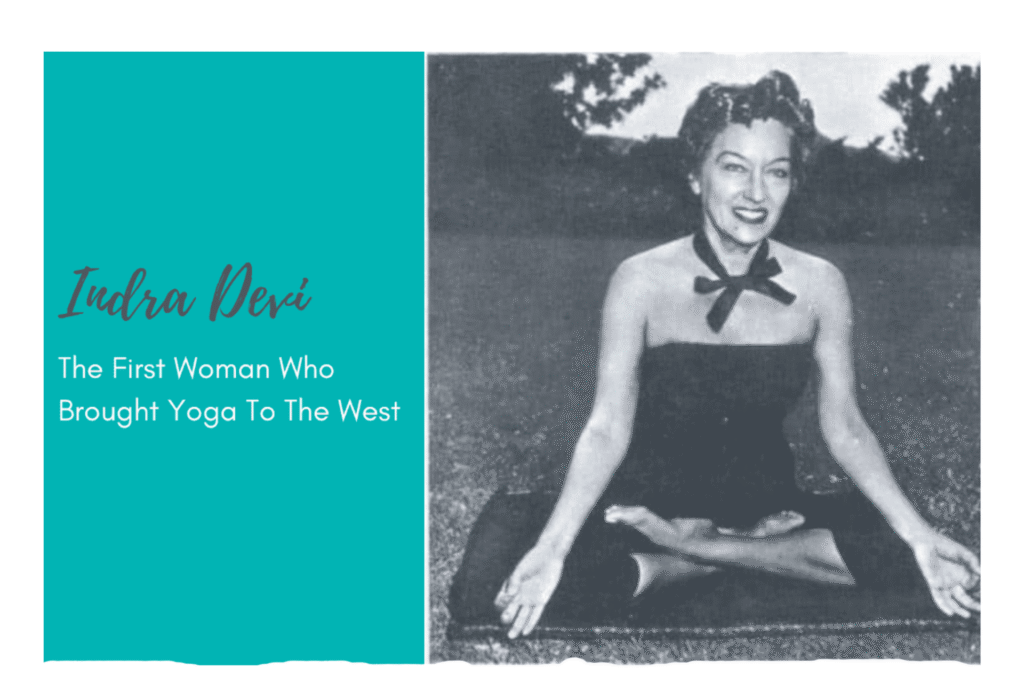
Indra Devi earned the title “First Lady of Yoga.” She was born in Russia in 1899. Her real name was Eugenie Peterson. As a young woman, she moved to India. There she found yoga’s power to change lives.
She wanted to study with Krishnamacharya. He was a famous teacher. At first, he said no. He didn’t take female students from other countries. This was common bias back then.
However, Indra Devi kept asking. She didn’t give up. Finally, Krishnamacharya agreed to teach her. As a result, she became one of his first students.
Building a Global Practice
She studied hard every day. She also learned fast from his teaching. After finishing her training, she began teaching others. Moreover, she opened yoga studios in many places. These included China, India, and Hollywood. Many movie stars became her students.
Indra Devi wrote important books about yoga. She taught around the world until age 100. She proved women could master yoga fully. Furthermore, she showed yoga works for all people.
Age doesn’t matter in practice. Similarly, your background doesn’t decide success. Her drive opened doors for many women. In other words, she paved the way forward.
Pema Chödrön: Buddhist Wisdom Teacher
From America to Buddhism
Pema Chödrön is a Buddhist nun. She teaches meditation. She was born in New York in 1936. Her birth name was Deirdre Bloomfield-Brown.
She lived a normal American life at first. Then her marriage ended badly. This hard time led her to Buddhism. Consequently, she explored meditation deeply. These practices connect closely to yoga. Both work with breath, mind, and awareness. Similarly, both aim for inner peace.
Becoming a Nun
Pema became one of the first American Buddhist nuns. She studied with Tibetan masters carefully. Additionally, she learned old meditation methods well.
Her hard work impressed her teachers greatly. As a result, she received full ordination. This was groundbreaking. After all, few Western women had reached this level before.
Teaching Wisdom Today
Today, Pema teaches at Gampo Abbey. That’s in Nova Scotia. She has written many popular books. Her teachings help people handle tough feelings. Moreover, she explains hard ideas in simple ways.
Many yoga students read her books often. Her advice proves helpful for their practice. Therefore, Pema shows women can be spiritual leaders. In addition, she proves the link between yoga and meditation.
Geeta Iyengar: Expert in Women’s Health
Learning from Her Father
Geeta Iyengar was B.K.S. Iyengar’s daughter. He was one of yoga’s most important teachers ever. Geeta learned yoga right from her father. She started as a teenager to get healthier.
She was sick often as a child. Fortunately, yoga made her much stronger. This personal experience shaped how she taught. Consequently, she understood yoga’s healing power.
Focusing on Women’s Bodies
Geeta became an expert in Iyengar Yoga. This style uses props like blocks and straps. Additionally, it focuses on exact alignment.
Geeta specialized in yoga for women’s health. She understood how women’s bodies change through life. Therefore, she made sequences for periods, pregnancy, and menopause. Her book “Yoga: A Gem for Women” is still widely read. In fact, it’s a must-read for female yoga students.
Her Teaching Legacy
Geeta taught at the Ramamani Iyengar Memorial Yoga Institute. That’s in India. Students came from all over to learn from her. Her teaching style was known for being strict but loving.
She asked for the best from every student. At the same time, she showed deep care for their struggles. Geeta died in 2018. However, her teachings still help women worldwide. Moreover, her influence keeps growing.
The Legacy of Women in Yoga
Transforming Modern Practice
Women have given yoga so much. They’ve adapted it for modern life well. All body types can now benefit from their work. Furthermore, they’ve shown yoga’s healing powers.
Women teachers stress the emotional benefits. Mental health gains are also highlighted. In addition, they create safe spaces for students. This caring approach changed yoga education. As a result, more people feel welcome in studios.
The Feminine Approach to Teaching
The feminine approach values process over perfect poses. Women teachers ask students to listen to their bodies. Additionally, they promote self-acceptance. Self-care matters too.
This differs from some old teaching ways. Those sometimes pushed students to do hard poses fast. In contrast, the feminine way honors where you are now. Therefore, students feel less pressure. They get more support instead.
Yoga for Social Good
Women link yoga to social causes in meaningful ways. They use yoga to help trauma survivors heal. Prisons also receive yoga programs from dedicated teachers. Homeless shelters get yoga too. Furthermore, they teach kids in poor communities.
This service approach shows yoga’s true goal. In other words, yoga should help everyone. It shouldn’t serve only rich or fit people. Rather, it should reach all who need healing.
Building the Business Side
The business side of yoga owes much to women. Female owners opened studios in small towns and big cities. Moreover, they made yoga clothing lines. Equipment companies were created too.
Online platforms for virtual classes were built. In addition, they created teacher training programs. Women turned yoga into a big industry. Consequently, this industry now supports thousands of teachers. Furthermore, it keeps making new opportunities.
The Future of Women in Yoga
Looking ahead, women will keep shaping yoga. New teachers bring fresh ideas constantly. Furthermore, they mix yoga with other healing methods.
Practices get adapted for specific groups carefully. Technology also helps reach more students. The future looks very bright. After all, women keep innovating. Expanding the practice continues too.
Recommended Reading on Women in Yoga
Essential Books for Women Practitioners
Many great books explore women’s bond with yoga. Here are some worth reading:
“Yoga: A Gem for Women” by Geeta S. Iyengar – This classic covers yoga for female bodies. It addresses different life stages. It includes clear instructions for practice during periods, pregnancy, and menopause. Therefore, it’s valuable for women at any age.
“The Woman’s Yoga Book” by Bobby Clennell – A beautiful guide with illustrations. It explains how yoga supports women through life phases. Moreover, the pictures make the poses easy to understand.
“Shakti Rising” by Kavitha Chinnaiyan – This book explores the divine feminine in yoga. It links old goddess traditions to modern practice beautifully. As a result, readers gain deeper spiritual understanding.
“Yoga for Women” by Padma Srinivasan – A practical guide with poses for women’s health concerns. It addresses common issues. These include stress, back pain, and hormone problems. In addition, it offers real solutions that work.
“Strala Yoga” by Tara Stiles – Written by a modern female teacher. This book presents yoga in an easy way. It stresses feeling good over looking perfect. Therefore, it’s great for beginners who feel scared to start.
Why These Books Matter
Reading these books deepens your understanding. You learn about women’s unique bond with yoga. They offer practical advice for daily practice. Furthermore, they share inspiring stories of women’s journeys.
They also remind you that yoga is personal. Each woman’s path looks different and unique. Therefore, these books help you find your own way. In addition, they give encouragement during hard times.
Conclusion
A Story of Resilience and Strength
Women in yoga have traveled far. From old temples to modern studios, they’ve been there. They’ve practiced quietly at home for centuries. Moreover, they’ve taught boldly in public when allowed.
The story of women in yoga shows resilience. It’s about not giving up when doors close. Furthermore, it’s about finding ways to practice despite problems.
Women didn’t just join yoga’s history. Instead, they actively shaped it. They made it what it is today. Therefore, we owe them huge thanks.
Joining the Legacy Today
When you step onto your mat, you join this long line. You connect with old practitioners across time. You also become part of a global community today.
This community supports women in finding strength. It helps them find peace and joy too. Yoga offers women tools for every life challenge. In particular, it teaches balance and patience. Self-love too. Furthermore, it reminds us of our inner wisdom and power.
Writing New Chapters
The legacy continues with every class taught. Every pose practiced adds to it. Women in yoga write new chapters every single day. Furthermore, they prove that yoga belongs to everyone equally.
Age doesn’t matter ultimately, as they demonstrate. Size doesn’t matter either. Ability level doesn’t determine success. What matters is showing up consistently. Similarly, what matters is breathing with purpose. Moving with intention daily. This dedication creates change gradually.
The Bright Future Ahead
The future of women in yoga looks very bright. More diverse voices join the conversation actively. Additionally, more women share their unique views openly.
The practice keeps growing constantly. It keeps evolving too. However, the core message stays the same always. Yoga offers women a path to wholeness. It provides healing. Furthermore, it helps them connect with inner wisdom deeply. Most importantly, it reminds them of their power and beauty inside.
Frequently Asked Questions
Can women practice yoga during their period?
Yes, women can practice yoga during their period safely. However, some teachers say to avoid certain poses. Inversions should be skipped during this time. Intense ab work should be avoided too. Listen to your body’s signals carefully.
Gentle poses often feel best. In particular, focus on restorative poses. Breathing exercises help too. Every woman’s experience differs greatly. Therefore, adjust your practice to what feels comfortable for you.
Is yoga safe during pregnancy?
Yoga can help a lot during pregnancy. Prenatal yoga classes are made for expecting mothers. These classes avoid poses that compress the belly. They also avoid lying flat on the back.
Always talk to your doctor first. Do this before starting any exercise during pregnancy. Furthermore, a skilled prenatal yoga teacher can guide you safely. In addition, they can change poses for each trimester properly.
How often should women practice yoga?
Practicing yoga two to three times per week brings clear benefits. Even one session per week helps if you’re consistent. Many women find that daily practice works best. Even just 15 minutes creates the biggest changes.
The key is doing it regularly. That matters more than long sessions. In fact, short, frequent practices often work better. They work better than occasional long ones. Therefore, aim for consistency over intensity.
Do women need flexibility to start yoga?
No, you don’t need to be flexible to begin. In fact, yoga actually helps you get more flexible over time. Teachers can change every pose for different levels easily.
Additionally, props like blocks and straps help everyone. Many women start yoga because they feel stiff. Fortunately, yoga meets you where you are right now. Furthermore, it moves at your own pace.
What style of yoga is best for women?
The best style depends on your goals. It also depends on what you prefer. Hatha yoga offers a gentle start to basic poses. Alternatively, Vinyasa provides a flowing, active practice.
Iyengar yoga stresses alignment. It uses props a lot. Similarly, Restorative yoga focuses on deep rest and healing. Try different styles to find what feels right. Moreover, many women enjoy doing several different styles. This keeps practice interesting and well-rounded.