
Have you ever wondered why yoga people bow to the sun? Every morning, millions do a flowing set of poses. These are called Sun Salutations. The story behind them reveals why the sun was our first teacher. Moreover, this practice connects us to an old tradition. It honors our most important teacher: the sun.
The story goes back thousands of years. Our ancestors looked up at the bright sun. Naturally, they felt grateful. The sun gave them life. Consequently, they created special movements. These showed respect. Today, we continue this tradition. Furthermore, we link old wisdom with modern wellness.
Sun Salutations: Why the Sun Was Our First Teacher
The Ancient Roots of Sun Worship
Long before modern yoga studios existed, people worshipped the sun. Old cultures in India, Egypt, and South America saw its vital role. Additionally, they understood it kept life going on Earth. Moreover, they knew something basic. Without the sun, nothing could grow. Nothing could thrive.
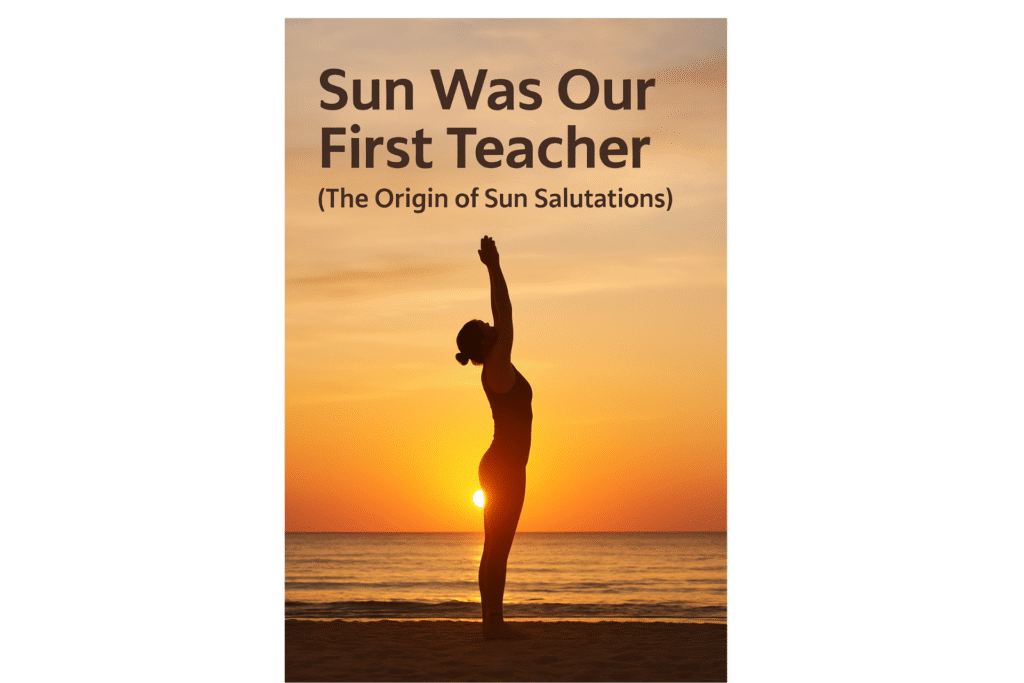
How the Sun Was Our First Teacher in Ancient Cultures
For these ancient peoples, the sun was our first teacher, showing the rhythms of life, growth, and renewal. They observed its consistent patterns and learned to align their lives accordingly.
In India, honoring the sun dates back over 2,500 years. The Vedas are old Indian texts. Similarly, they contain hymns for Surya. Surya is the sun god. People would wake before dawn. Then they greeted the rising sun. They used prayers and movements. These morning rituals were sacred acts.
How Sun Salutations Developed Over Time
The Sun Salutation sequence we know today grew slowly. It took centuries. Early versions were simple bows. People did them toward the rising sun. Furthermore, Hindu tradition encouraged people to offer prayers. At the same time, they touched the earth with their foreheads. This showed deep respect.
The Raja of Aundh’s Contribution
Around the early 1900s, the Raja of Aundh made big changes. He ruled a small state in India. Moreover, he helped make the practice popular. He used a more structured sequence. Additionally, he told his subjects to practice these movements. This was for fitness and spiritual growth. As a result, his work helped change Sun Salutations. It went from a religious practice to an exercise system.
The Modern Sequence Takes Shape
The modern version has twelve positions. These flow together smoothly. Each position links with a breath. You either breathe in or breathe out. Consequently, this creates a moving meditation. It honors both body and spirit. The sequence became basic. Today, it appears in many yoga styles worldwide.
The Significance of The Sun
Why The Sun Matters So Much
The sun is truly amazing. This giant ball of gas sits 93 million miles away. Yet its light and warmth make all life possible. Plants use sunlight to create food. Then animals eat those plants. Or they eat other animals.
Every bit of energy you use ultimately comes from the sun. It fuels your movement, your thoughts, and your life itself. The food you depend on is simply stored sunlight transformed through plants. Even the oxygen you breathe is a gift of photosynthesis. The warmth that surrounds and sustains you is solar in origin as well. Long before modern science explained any of this, people intuited the connection. They understood that the sun was our first teacher, revealing the interconnectedness of all living things. They recognized the sun as the great source behind all living things.
The Sun’s Role in Human Health
Modern research confirms what old cultures knew. The sun plays a big role in human health. Sunlight helps our bodies make vitamin D. In turn, this makes bones stronger. It supports immune function. Additionally, morning sunlight helps set our sleep cycles. As a result, this improves sleep quality. It improves mood.
Mental Health Benefits
The sun’s light also helps our mental health. Seasonal affective disorder is a type of depression. It happens when people don’t get enough sunlight in winter. Fortunately, just fifteen minutes of morning sun can boost serotonin. Therefore, this helps people feel happier. They have more energy.
Cultural and Spiritual Importance
Across different traditions, the sun stands for important spiritual ideas:
- Light and knowledge: The sun lights up darkness. Similarly, it stands for wisdom.
- Consistency and reliability: The sun rises every day. Consequently, it stands for dependability.
- Life-giving energy: The sun keeps all living things alive. Thus, it stands for creative power.
- Transformation: The sun’s daily journey mirrors personal growth.
- Unity: One sun shines on all people equally. Therefore, it stands for connection.
These symbolic meanings made the sun a natural focus. When people do Sun Salutations, they connect with these deeper meanings. At the same time, they exercise their bodies.
Understanding Why the Sun Was Our First Teacher
The Sun Was Our First Teacher: Lessons from Its Daily Journey
The sun teaches us through its patterns. Every morning, it rises in the east. It does this faithfully. Throughout the day, it travels across the sky. Additionally, it gives light and warmth. As evening comes, it sets in the west. Consequently, this makes way for nighttime rest.
Daily Renewal and Fresh Starts
This daily cycle teaches important life lessons, reminding us why the sun was our first teacher. The sunrise reminds us that each day brings fresh opportunities. It brings new beginnings. No matter what happened yesterday, today offers another chance. We can try again. Similarly, the sunset teaches us about completion. It reminds us to rest after work.
The Sun’s Generosity and Unconditional Giving
One of the sun’s greatest lessons is about generosity. The sun shines on everyone equally. Rich and poor. Young and old. Kind and unkind. Moreover, it doesn’t pick favorites. Instead, it gives its light to all living beings. Furthermore, it does this without expecting anything back.
This unconditional giving demonstrates why the sun was our first teacher in matters of compassion and generosity.
Applying Solar Generosity to Our Lives
This teaches us about true generosity. It teaches us compassion. When we practice Sun Salutations, we think about how we shine our own light. We ask ourselves important questions. For example: How can I give without expecting rewards? How can I share my gifts?
The Sun’s Balance and Rhythm
The sun also teaches balance. It does this through its yearly cycle. In summer, days are long and warm. In winter, they’re short and cold. Therefore, this natural rhythm shows us that life has seasons. Some are for activity. Others are for rest. Both are necessary.
Honoring Natural Cycles
When we match our practice with the sun’s rhythms, we honor our own cycles. Some days we feel energetic. On these days, we can practice hard. Other days need gentler movement. Importantly, the sun’s example reminds us that both states are normal. Both are healthy.
Sun Salutations: The Practice of Saluting The Sun
What Sun Salutations Actually Are
Sun Salutations are called Surya Namaskar in Sanskrit. Specifically, they are a flowing sequence of yoga poses. The practice links movement with breath. This creates a continuous flow. Most versions include twelve distinct positions. Furthermore, these work together. They stretch the whole body, but that’s only the beginning. The movements also build strength, layer by layer. And on top of that, they leave you feeling noticeably more energized.
Each movement has a purpose. Forward folds calm the nervous system. Additionally, they stretch the back body. Backbends open the chest. They energize the spine. Downward-facing positions strengthen the arms. Moreover, the flowing nature creates benefits. These are like moderate aerobic exercise.
The Traditional Twelve Positions
The classic sequence includes these positions:
- Mountain Pose: Stand tall. Put hands at heart center. Set your intention.
- Upward Salute: Reach arms overhead. Open the front body.
- Standing Forward Fold: Bend forward. Surrender to gravity.
- Halfway Lift: Lengthen the spine. Put hands on shins.
- Plank Pose: Build full-body strength.
- Four-Limbed Staff Pose: Lower down with control.
- Upward-Facing Dog: Open the chest. Strengthen the back.
- Downward-Facing Dog: Create an inverted V-shape. Stretch fully.
- Halfway Lift: Lengthen the spine while returning forward.
- Standing Forward Fold: Fold deeply again before rising.
- Upward Salute: Reach up to greet the sky.
- Mountain Pose: Return to center. Complete the cycle.
The Sacred Number 108
Traditional practitioners often do 108 Sun Salutations. They do them during special occasions. Or during season changes. The number 108 holds deep meaning. It’s important in Hindu and Buddhist traditions. It appears in sacred texts. Additionally, it stands for cosmic wholeness. Furthermore, it connects earthly practice with universal energies.
The Physical and Spiritual Challenge
Doing 108 rounds is physically hard. But it’s spiritually rewarding. It takes about two hours. Consequently, this extended practice becomes a moving meditation. It quiets the mind. Many yoga studios offer 108 Sun Salutation events. These happen during summer and winter solstices.
Practicing with Intention and Gratitude
The physical movements are only one part. The practice also involves the right mental attitude. Before beginning, practitioners remember that the sun was our first teacher and offer gratitude for its life-giving energy. They set an intention or thank the sun for its continuous guidance.
Breath and Movement Coordination
During practice, attention focuses on matching breath with movement. Each inhale connects with expanding movements. Backbends are an example. Each exhale pairs with contracting movements. Forward folds are an example. Therefore, this breath awareness turns simple exercise into mindful meditation.
Adding Mantras to Deepen Practice
Some practitioners say mantras while doing Sun Salutations. Each of the twelve positions relates to a different name. It also relates to an aspect of the sun. Consequently, chanting these names adds another layer. It brings more devotion. It brings more focus.
Modern Studies on Sun Salutations
Scientific Research on Physical Benefits
Recent scientific studies have looked at the health effects. They studied regular practice. Research shows that this practice gives many benefits. However, these benefits need consistent practice over time.
A study was published in the International Journal of Yoga. It found big results. Practicing for twenty-four weeks improved heart fitness. It improved it significantly. Participants showed increased flexibility. Muscle strength improved. Endurance increased too. Additionally, their resting heart rates went down. This shows improved heart health.
Effects on Muscle Strength and Flexibility
Research shows that Sun Salutations work nearly every major muscle group. The sequence strengthens the arms, shoulders, core, and legs. Furthermore, it improves flexibility. This happens in the spine, hamstrings, hip flexors, and shoulders. As a result, this makes it an efficient workout.
Detailed Muscle Activation Studies
Scientists have measured muscle use during each position. Certain poses engage muscles strongly. For example, Plank engages the core. Four-Limbed Staff does too. Similarly, Downward-Facing Dog turns on shoulder muscles. It turns on leg muscles too. This makes the practice time-efficient. It’s good for building strength.
Mental Health and Stress Reduction Benefits
Studies also show big mental health benefits. These come from regular practice. A research project happened in India. It studied participants who practiced daily. After six months, they showed lower anxiety levels. Moreover, they showed better stress management.
How Stress Reduction Works
The practice appears to lower cortisol. This is the body’s main stress hormone. The mix of rhythmic movement helps. Controlled breathing helps. Focused attention helps. These turn on the parasympathetic nervous system. This system promotes relaxation. Consequently, it fights the stress response.
Impact on Metabolic Health
Recent studies have looked at how Sun Salutations affect metabolism. They affect weight management. Regular practice increases metabolic rate. Therefore, this helps the body burn calories more efficiently. One study found interesting results. Twenty minutes burns about 250 calories.
Blood Sugar Benefits
Research also shows improvements in blood sugar. This happens among regular practitioners. The practice increases insulin sensitivity. In turn, this helps maintain stable blood glucose. As a result, Sun Salutations are helpful. They help people managing diabetes.
Improvements in Respiratory Function
Scientific investigations have documented how Sun Salutations enhance breathing. They improve efficiency too. The practice teaches proper breathing. At the same time, it builds respiratory muscle strength. Studies show increased lung capacity. Additionally, they show improved oxygen use.
College Student Research Results
One research project measured lung function in college students. This happened before and after a twelve-week program. Participants showed big improvements. Vital capacity increased. Forced expiratory volume improved. Peak expiratory flow rate went up too. These improvements show healthier respiratory systems.
Let’s Salute The Light!
Starting Your Own Practice
Beginning a Sun Salutation practice needs no special equipment. You don’t need expensive memberships either. All you need is a small space. In this space, you can stretch your arms. A yoga mat gives cushioning. However, it isn’t necessary.
Start slowly if you’re new to yoga. Start slowly if you’re new to exercise. Learn each position separately. Do this before linking them together. Focus on proper form. Don’t worry about speed. Don’t worry about repetitions. Importantly, even three to five rounds give big benefits.
Best Times to Practice
Traditional yogis practice at sunrise. Similarly, they face east toward the rising sun. This timing matches the practice with natural body rhythms. Furthermore, morning practice energizes the body. It sets a positive tone for the day.
Flexibility in Timing
However, Sun Salutations can be done any time. Some people practice at sunset. This marks the day’s end. Others use the sequence as a midday boost. Listen to your body. Additionally, choose times that fit your schedule.
Creating Your Sacred Space
Sun Salutations can be practiced anywhere. Nevertheless, creating a dedicated space makes it better. Choose a quiet area. You won’t be disturbed there. If possible, practice near a window. Natural light should enter. This keeps the connection with the sun.
Personalizing Your Practice Space
Some practitioners create small altars. They use meaningful objects. These might include candles, crystals, or images. These items help establish the sacred nature. However, simplicity works equally well. The most important element is your sincere intention. Focused attention also matters.
Modifying for Your Body
Everyone’s body has different capabilities. Everyone has different limitations. Therefore, Sun Salutations should be adapted. They should meet individual needs. If full push-ups feel too hard, drop your knees. Do this in Four-Limbed Staff Pose. If forward folds strain your back, bend your knees.
Special Population Modifications
Pregnant women can practice modified versions. These accommodate changing bodies. People with wrist injuries can do the sequence on their forearms. Similarly, older adults can practice gentler variations. These emphasize breath and intention. The practice should feel challenging. But never painful.
Building a Consistent Habit
Consistency matters more than duration. It matters more than intensity. This is true when developing a yoga practice. Practicing ten minutes daily gives greater benefits. This beats practicing an hour once weekly. Set realistic goals. Furthermore, make sure these goals fit your lifestyle. Gradually increase as the habit becomes established.
Finding Your Ideal Time
Many people find morning practice easiest. It’s easiest to maintain consistently. By practicing before the day’s demands arise, you ensure it happens. Others prefer evening practice. For them, it’s a way to release stress.
Connecting with Community
Sun Salutations can be practiced solo. However, joining a community enhances motivation. It enhances learning. Many yoga studios offer beginner-friendly classes. These teach Sun Salutations step-by-step. Additionally, online videos provide free instruction. These work for home practice.
Group Practice Benefits
Some communities organize group events. These happen for special occasions. Practicing alongside others creates powerful energy. The shared intention deepens your appreciation. Synchronized movement does too. Consequently, this enhances your connection to this old practice.
Resources
Books on Sun Salutations
For those interested in learning more, many resources are available. These can help you deepen your practice.
- “The Complete Book of Vinyasa Yoga” by Srivatsa Ramaswami offers detailed instruction. It covers flowing sequences.
- “Light on Yoga” by B.K.S. Iyengar provides foundational knowledge. This includes Sun Salutations.
- “The Heart of Yoga” by T.K.V. Desikachar explores the spiritual dimensions.
Online Video Resources
- Yoga With Adriene offers free tutorials. These are beginner-friendly on YouTube.
- Yoga International provides courses. These are comprehensive courses on various styles.
- DoYogaWithMe features classes for all levels. This ranges from beginners to advanced.
Apps for Daily Practice
- Down Dog generates unique sequences. It does this for each session.
- Daily Yoga offers guided programs. Additionally, it provides progress tracking.
- Insight Timer includes free yoga classes. It includes meditation guides.
Research and Articles
- International Journal of Yoga publishes peer-reviewed studies. These are about yoga benefits.
- Yoga Journal provides articles. These cover history, technique, and modern applications.
- PubMed contains scientific research. This research is about yoga’s health effects.
Online Yoga Teacher Training Courses
Overview of Teacher Training
For those who wish to deepen their understanding, several online programs are available. Similarly, these programs are perfect for those who want to teach others.
200 Hour Online Yoga Teacher Training
The 200-hour certification represents the foundational level. It’s the foundational level of teacher training. This program covers yoga philosophy, anatomy, and teaching methods. Moreover, this includes poses like Sun Salutations. Students learn the historical context. Additionally, they learn how to safely guide others.
Program Structure and Content
These programs include live online sessions. Experienced instructors lead them. Recorded content is also provided. This allows self-paced learning. Participants study old texts. These include the Yoga Sutras. Furthermore, the curriculum includes proper alignment. It covers modifications for different bodies.
Certification Benefits
Upon completion, graduates receive certification. Yoga Alliance recognizes this. It allows them to teach professionally. Graduates can work at studios, gyms, and wellness centers. Many graduates also gain confidence. Consequently, this helps them deepen their personal practice.
300 Hour Online Yoga Teacher Training
The 300-hour training is an advanced program. It’s designed for teachers. These teachers have completed their 200-hour certification. This deeper dive explores more subtle aspects. It explores aspects of yoga practice and teaching. Students learn advanced variations. Other sequences are also studied.
Advanced Topics Covered
Advanced training covers specialized topics. These include yoga therapy, breathing techniques, and meditation. Teachers learn to work with specific populations. For example, they learn to teach seniors. They learn to teach pregnant students. They learn to teach people with injuries. The program emphasizes developing a unique teaching voice.
Path to 500-Hour Certification
Combining the 200-hour and 300-hour trainings results in the 500-hour level. This represents a significant commitment. It shows dedication to yoga study. Moreover, it opens doors to advanced teaching opportunities. Specialized programs become available too.
500 Hour Online Yoga Teacher Training
Some schools offer comprehensive 500-hour programs. These programs include both foundational and advanced training. These intensive programs provide complete education. Coverage spans from beginning to advanced levels. Students develop expertise in multiple styles.
Professional Advantages
The 500-hour certification shows serious dedication. It demonstrates commitment to yoga study. It qualifies teachers for leadership positions. Additionally, it opens doors to mentorship roles. Specialized teaching opportunities become available. Many studio owners hold this certification.
Accessibility Through Online Learning
Online formats make these trainings accessible. People worldwide can access them. Students can complete coursework while keeping their regular work. They can keep their family commitments. The combination of live classes and self-paced study provides flexibility. Therefore, this makes training more achievable for everyone.
Conclusion
The Power of Connection
The practice of Sun Salutations connects us. It connects us across time and space. It links us to countless practitioners. These practitioners honored the sun before us. This old tradition recognizes that the sun was our first teacher. By practicing these movements with intention, we align with natural rhythms. Furthermore, we connect with universal energies.
Lessons from the Sun
The sun was our first teacher because its daily journey teaches lessons about consistency, generosity, and renewal. It rises faithfully each morning. This happens regardless of weather. Moreover, it gives light and warmth to all living beings. It does this without picking favorites, offering its light to all. There’s no expectation of return, no bargaining. Each day, the cycle comes to a close. Then a new beginning arrives again with the morning.
Embodying Solar Qualities
When we practice Sun Salutations, we honor the truth that the sun was our first teacher and embody these solar qualities in our lives, not just in thought but in action. Consistency becomes something we learn through repetition. Showing up for ourselves is part of that. Extending that presence to others is another. And throughout it all, we practice giving without tallying or keeping score. Additionally, we honor both our active and receptive energy. We celebrate new beginnings. At the same time, we respect natural endings.
Science Meets Ancient Wisdom
Modern science confirms what old wisdom always knew. This practice benefits body, mind, and spirit. It strengthens muscles. It increases flexibility. Heart health improves. Stress reduces. Mental clarity enhances. These benefits complement deeper spiritual rewards. These include connection, gratitude, and inner peace.
An Accessible Practice for All
Whether you practice alone at sunrise or with a community, Sun Salutations offer a complete system. The practice needs no expensive equipment. It needs no memberships. It needs no special abilities. Anyone can begin at any level. Furthermore, everyone can progress at their own pace. The sun doesn’t judge your flexibility. It doesn’t count your repetitions.
Progress Over Perfection
As you develop your practice, remember something. Perfection isn’t the goal. The sun continues shining. This happens whether clouds obscure it or not. Similarly, your practice remains valuable. This is true whether you complete one round or one hundred. What matters is bringing mindful attention. Bringing sincere gratitude matters.
Your Path Forward
Let the sun’s steady presence inspire your dedication. Let its generous warmth encourage compassion. Have compassion toward yourself. Have it toward others. Let its daily rebirth remind you. Every moment offers a fresh start. In this way, the sun truly becomes your teacher. Consequently, it guides you toward greater health, happiness, and wholeness.
Frequently Asked Questions
Q1: Do I need to practice Sun Salutations outdoors or facing the actual sun?
Traditional practice faces east toward the rising sun. However, you can practice anywhere at any time. The important elements are the intention and attention you bring.
If you can practice near a window or outdoors, that’s wonderful. Nevertheless, the benefits come from movements, breath coordination, and mindful focus. These happen regardless of location. Many people practice successfully in studios or home spaces without direct sunlight.
Q2: How many Sun Salutations should beginners perform daily?
Beginners should start with three to five rounds. Then gradually increase as strength develops. As stamina develops. Quality matters more than quantity.
Focus on learning proper alignment. Coordinate breath with movement before increasing repetitions. Even three mindful rounds provide big benefits. As your practice develops over weeks, you can naturally increase. You can go to ten or more rounds if desired.
Q3: Can Sun Salutations replace my regular workout routine?
Sun Salutations provide excellent benefits. These include heart exercise, strength building, and flexibility training. However, a complete fitness program typically includes varied activities.
Sun Salutations can serve as your primary exercise. This works if practiced vigorously for thirty to forty-five minutes. Many people use them as a warm-up. They warm up before strength training. Others practice them on rest days. Listen to your body. Additionally, combine Sun Salutations with other activities you enjoy.
Q4: Are there any conditions or situations where I shouldn’t practice Sun Salutations?
People with certain health conditions should talk with healthcare providers before beginning. Those with high blood pressure need medical clearance. So do people with heart problems. So do people with recent surgeries.
Pregnant women should practice modified versions. Get qualified instruction. Anyone with wrist, shoulder, or back injuries should work with experienced teachers. Learn safe modifications from them. If you feel pain during practice, stop immediately. Then seek guidance from a qualified instructor.
Q5: What’s the difference between Sun Salutation A and Sun Salutation B?
Sun Salutation A is the basic sequence described in this article. It has twelve positions. Sun Salutation B is a more challenging variation. Specifically, it includes additional poses. These include Chair Pose. These include Warrior I.
Sun Salutation B provides a more intense workout. Additionally, it takes longer to complete. Beginners typically master A first. Then they progress to B. Both versions honor the sun. Both provide similar benefits. However, B offers greater physical challenge. It offers more variety.
Q6: Why do people say the sun was our first teacher?
The sun was our first teacher because ancient cultures learned fundamental life lessons by observing its patterns—consistency, generosity, renewal, and the balance of activity and rest. Its daily journey taught humans about cycles, transformation, and the interconnectedness of all life.
By watching the sun rise each morning without fail, give light to all beings equally, and complete its cycle each evening, our ancestors understood universal truths about dedication, unconditional giving, and natural rhythms. These timeless teachings continue to guide practitioners today through the movements of Sun Salutations, making the sun as our teacher a concept that transcends time and culture.